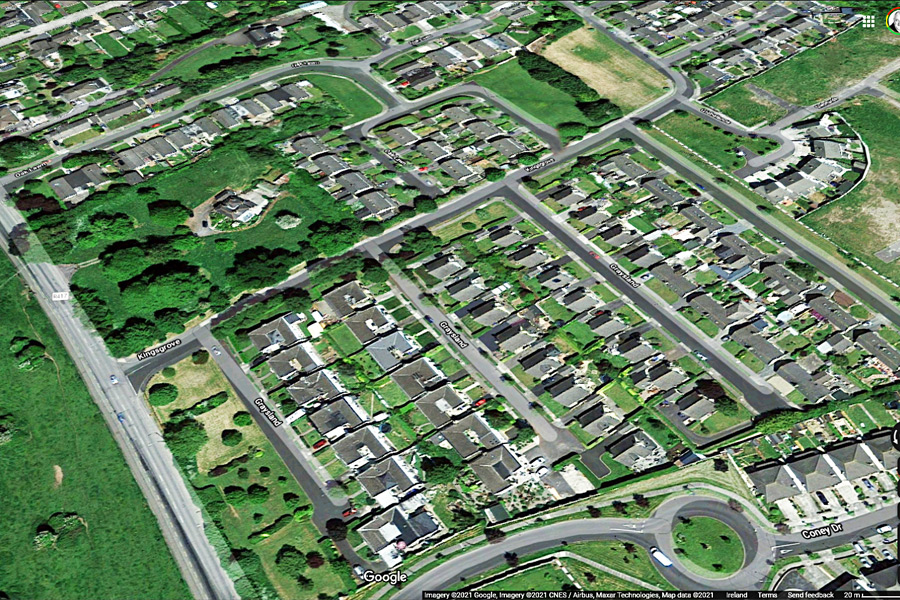
kingsgrove-graysland-google-maps-900x600

Cul-de-sac streets are safer and quieter – report

Despite its popular success, the “loops and lollipops” street pattern has been repeatedly criticised by many leading architects and planners, particularly New Urbanists, who strongly advocate the inter-connected gridiron pattern.

The cul-de-sac model has several advantages that are worth considering.

From the perspective of residents, the pattern (cul de sac) usually offers quiet, safe streets where children can play with little fear of fast-moving traffic.

A discontinuous short-street system, unlike the grid, may promote familiarity and neighboring.

The cul-de-sac street pattern is also supported by the market: home buyers often pay premium prices for the most isolated cul-de-sac lots.

Analysis of automobile accident data supports the notion that cul-de-sac and loop patterns are safer than other kinds of streets.

A comparative study of street patterns indicates significant homebuyer preference for the cul-de-sac and loop patterns.

Residents also preferred the cul-de-sac as a place to live, even if they actually lived on a through or loop street.

People said they felt cul-de-sac streets were safer and quieter because there was no through traffic and what traffic there was moved slowly.

They also felt they were more likely to know their neighbors.

One resident’s comment was typical: “Our pets and kids are safer when there is a no-outlet street; you feel kidnapping is less likely—there is more of a sense of neighborhood.”

Thus, the study generally corroborated earlier transportation research on the values of a hierarchical discontinuous street pattern.

It also supported claims that cul-de-sacs are more frequently and more safely used by children.

Read the full article here:

Reconsidering the Cul-de-sac

kingsgrove-graysland-residents-group-survey-01-01-1150x228
